Before I formed you in the womb, I knew you; and before you were, I set you apart (Jeremiah 1:5)

Thursday, January 23, 2020

One Anothering: Care for One Another

“One Anothering: Care for One Another” was preached at First Presbyterian Church of Allentown, PA on January 19, 2020. This sermon was inspired by Scripture, commentaries, intentional listening, a letter written by a pastor (see below), and One Anothering by Richard C. Meyer.  You can watch this sermon at FPCA’s alternative sermon here, starting at 19:00. You can listen to this sermon FCPA’s traditional service here

--

1 Corinthians 12:24b-25

24b But God has so arranged the body, giving the greater honor to the inferior member, 25 that there may be no dissension within the body, but the members may have the same care for one another.

--

In the fall of 2014, I started my first field placement as part of Master of Divinity degree through Princeton Theological Seminary. Master of Divinity students were required to complete two field placements, also known as internships, to graduate; one of which must be in a church. I was hired by Lawrence Road Presbyterian Church in Lawrenceville, New Jersey, which is directly in between Princeton and Trenton. There, I served under the supervision of their pastor: The Reverend Doctor Nina Reeder. Every Wednesday, before a community meal and Wednesday evening activities, I would have my one-on-one “supervision time” with Nina. We would sit in her office and discuss any and everything that were on our minds that week. And by that, I mean, I would talk for an hour and Nina would listen, interjecting occasionally here and there with questions and helpful points of clarification.


I’m now a few years into ministry, but I’ll never forget how valuable it was to sit with someone in ministry and to just be heard. To just sit with someone as you named all the cares and concerns on your mind while they just listened.


I had the opportunity to experience this valuable time for two years, because by the grace of God, Lawrence Road hired me back for a second year. For one hour each week, I sat with Pastor Nina from Fall 2014 to Spring 2016, as we just listened to one another.

You see, seminary and is an odd and wonderful and complicated time for Divinity students. You’d start nearly every morning with classes, then chapel, then lunch, then more classes, then dinner, and then homework. And you would so, from morning until night, with your classmates. All day, nearly every day with the same people… and because we were all experiencing the same thing, there was usually one thing on our mind that we had to chat about any chance we could: our faith.

And you can do all the research and learning in the world, but so much of religious and theological conversations, are based on one’s own experiences, beliefs, and of course, opinions. And when our opinions of our faith were being shared, there was always bound to be some disagreement. And that disagreement wasn’t always so friendly.

You don’t have to be a seminary student to know this: to know that conversations about religion, our beliefs, and our faith can so often lead to disagreements. Think about that. Think about a moment where you were talking about your beliefs, your faith, your relationship with God, or how this relationship influences your approach to social issues, politics, familial life, education, etc. And when you’re thinking about that moment, think of a time when that conversation led to a disagreement, whether it be a family member, friend, colleague, fellow church member, or stranger.

How many you have had a disagreement over your faith at a dinner table? 
Or over social media? 
How about during a bible study?
How many of you have had a disagreement with someone else over your beliefs here, at First Presbyterian?

It’s more common than we think. I think we have all experienced it at some point. There’s a reason religion is one of those taboo topics we are told to avoid talking about at family gatherings and social events with friends. It’s because this "taboo topic" so often it leads to disagreement, and for some reason we think disagreement is an end-all negative moment in our relationships with one another.

And honestly, sometimes it is, because in those disagreements, we race to conclusions and we argue with each other and we overpower each other and we dismiss each other because we want to make sure our voice is the one voice that is heard.

So often when we disagree, we do one of two things.

First, we do everything we can to have that other person – the person we are disagreeing with – to leave their side and join ours. We talk over them, we raise our voice, we interrupt theirs because we want them to leave their experience, their faith journey, their beliefs, their opinions, their story, their life behind and have theirs – all of that – exactly like ours. We want to fix their “wrong” opinion.

Or we do the opposite. We dismiss their voice and then we ignore their voice. We say, “Let’s not have this conversation.” I don’t want to hear about your experience, your faith journey, your beliefs, your opinions, your story, your life because it’s not the same as mine. And because I don’t want to hear yours, I’m also not going to share any of my faith with you because you just won’t get it and you just aren’t worth it. We want to silence their “wrong” opinion.

Do either of those reactions sound familiar to you? Whether any of us want to admit it or not… 
Sometimes it’s easier to admit our wrongdoings knowing we aren’t the only one. It’s easier to admit we handled a disagreement poorly knowing we’re not the only one in the room who has. Maybe even there’s someone in this room that you when in a moment of disagreement, you tried to fix or to silence their side of the conversation. 

Because even in the church there is disagreement. 

Look at the church in Corinth.

The apostle Paul writes the first letter to the Corinthians because they are ultimately the divided church. The Corinthians time and time again through their conversations about faith further divided their church. And they thought because they were having these conversations of faith, they were living out the good news of Jesus Christ. But they failed to see that although they were talking about Christ, they weren’t modeling his actions through their own actions. Because they were talking about Christ, they believed it must be okay if they pushed those who disagreed out of their church rather than giving them a place to be heard in the church. 

They disagreed on five major infractions. See if any sound familiar to disagreements we might have today.

The church in Corinth disagreed and divided themselves by who their favorite ministry leader is.
The church in Corinth disagreed and divided themselves on sexual morality. 
The church in Corinth disagreed and divided themselves on what food they could eat. 
The church in Corinth disagreed and divided themselves by stating which gift in ministry is the best. 
And the church in Corinth disagreed and divided themselves on their belief whether or not the resurrection of Christ actually happened.

In chapter twelve, in which we find our short verse and a half, Paul is addressing the disagreement over which gifts in ministry are the best.

Paul wrote to them, which you heard earlier, “But God has so arranged the body, giving the greater honor to the inferior member, that there may be no dissension within the body, but the members may have the same care for one another.”

This disagreement and division still happens today, over the topic of gifts in ministry, and it’s in the moments when we fix or silence each other when our beliefs on certain issues are the same. Because we believe that our beliefs must be superior to another… and we don’t listen to the inferior. 

Following a heated congregational meeting at a small Lutheran church in Des Moines, Washington; after divided conversations on topics such as same-sex relationships, nuclear weapons, abortion, the inerrancy of the Bible, and evangelism verse mission. Okay, first of all, woof, talk about a congregational meeting, ours in on February 23rd. But second of all, that church left that meeting so divided that they sent a letter to their favorite ministry leader (another thing Paul warns which divides the church). But anyway, they send this letter to their founding pastor and the founding pastor wrote back a modern translation of 1 Corinthians 12. Listen to an excerpt of his letter:

There is one Spirit, but a variety of gifts.
There is one Lord, but a variety of ways that people serve.
There is one God and Father, but a variety of ways that people work for the kingdom.

God gives different gifts to different people.
Some, a passion for peace;
Others, a passion for political freedom.
Some, a passion for life and its sacredness,
Others, a passion for forgiveness and mercy.
Some, a passion for a more closed interpretation of the Bible,
Others, a passion for a more open interpretation of the Bible.
Some, a passion for evangelism,
Others, a passion for justice.

All of these people who spoke to you this morning [at the congregational meeting] are working for the common good.

Each and every one of these people this morning are inspired by the one and same Spirit, the Spirit who gives to each person their unique and different perspective.

The pastor continues later in his letter:

If you have these gifts, if you have these passions in your heart, these workings, these ways of serving God’s kingdom; but if you don’t have love inside of you for your brothers and sisters who think and feel differently than you, you are nothing. The greatest gift that God has for you is love. Love for people who don’t think like you. Love for people who do not share your point of view on specific issues. You are to make love, your goal, your aim, your greatest purpose for life.

That’s how the pastor ended his letter. On the topic of loving one another, especially when we disagree. 

The truth is: we will always have disagreements in the church. 

It’s not unique to First Presbyterian Church of Allentown. 
It’s not unique to the Presbytery Church (USA).
It’s not unique to mainline protestants. 
It’s not even unique to this century.

And time and time again, we are given the reminder that in our disagreements with each other, we must not divide from each other. But rather, we must listen . We need to talk about our disagreements but not to fix or silence each other, but because it provides opportunities to care for one another.  Because each person has a gift that is a special, a home in the Church, and a place as a member of Christ’s body.

Friends, you must care for one another; we must care for each other. Because the arm is just as valued as the leg, the ear as the eye. The republican is just as valued as the democrat, the old is just as valued as the young. The alternative worshipper is just as valued as the traditional worshiper. The Pentecostal and the Catholic are just as valued as the Presbyterian. The Muslim the Jew and the atheist are just as valued as the Christian… And vice versa.

I’ll never forget what that intentional time of listening with Pastor Nina meant to me and how it helped shape me into the pastor that is before you today. I grew more in my identity, authority, and faith in that one intentional hour of the week than I did anywhere else. I was heard, and I was valued. I was lifted up as an equal member as the body of Christ. And now I am given the opportunity to do the same; to listen and to lift up. And so are you.

What a gift it is to listen; to hear stories and experiences, because that’s what draws us together as the body of Christ. And we are called to care for this body, every member of this body. Thanks be to God. Amen. 

--
Picture of Rev. Dr. Nina Reeder and I at my Service of Installation as Associate Pastor at First Presbyterian Church of Allentown; January 19, 2020. Photo Credit: Julie Klebe

Monday, December 23, 2019

Straw for the Manger – Recognize Emmanuel: God is With Us

“Straw for the Manger – Recognize Emmanuel: God is With Us” was preached at First Presbyterian Church of Allentown, PA on December 22, 2019. This sermon was inspired by Scripture, commentaries, Advent & Christmas seasons, the character of Joseph, the name & promise of Emmanuel, and the PC(USA) Advent devotional series: “Straw for the Manger. You can watch this sermon at FPCA’s alternative sermon here, starting at 18:40. You can listen to this sermon FCPA’s traditional service here

--

Matthew 1:18-25

18 Now the birth of Jesus the Messiah took place in this way. When his mother Mary had been engaged to Joseph, but before they lived together, she was found to be with child from the Holy Spirit. 19 Her husband Joseph, being a righteous man and unwilling to expose her to public disgrace, planned to dismiss her quietly. 20 But just when he had resolved to do this, an angel of the Lord appeared to him in a dream and said, “Joseph, son of David, do not be afraid to take Mary as your wife, for the child conceived in her is from the Holy Spirit. 21 She will bear a son, and you are to name him Jesus, for he will save his people from their sins.” 22 All this took place to fulfill what had been spoken by the Lord through the prophet:

23 “Look, the virgin shall conceive and bear a son,
          and they shall name him Emmanuel,”

which means, “God is with us.” 24 When Joseph awoke from sleep, he did as the angel of the Lord commanded him; he took her as his wife, 25 but had no marital relations with her until she had borne a son; and he named him Jesus.

--

Last Sunday I had the privilege of joining some members of our community of faith as we visited a few of our homebound members and sang them some well-known Christmas songs. You can guess some of the songs. “Silent Night,” “Little Drummer Boy,” “Jingle Bells,” and of course, “We Wish You a Merry Christmas!” All songs most of us could sing along to… which is a good thing for amateur singers like me who are trying to bring some festivity and joy through the age-old practice of Christmas Caroling.

And then, we added more Christmas cheer as we drove from house to house. I was in a vehicle with three of our youth and one of their parents. On the radio was, of course, more Christmas music.

Between two of the houses, a Christmas song came on the radio that I wasn’t familiar with. It kind of had some catchy lyrics, so I was following along. One of the youth in the backseat was singing along to every word of this song. She had it memorized. I was impressed. I was even more impressed when I found out that this song that the youth knew every word to was first released in 1953. And yes, we were listening to the original version.

The song that we were listening to was “I Want a Hippopotamus for Christmas,” first recorded and sung by Gayla Peevey, who was ten years old at the time. 

In the song, Gayla states that she doesn’t want a doll or a tinker toy; all she wants is a hippopotamus for Christmas. She doesn’t want a crocodile or a rhinoceros. She wants a hippo! Because she like hippopotamuseses and hippopotamuseses like her too. Listen to the song if you don’t know it; you’ll understand that last part.

I’m sure we’re all familiar with buying gifts for our friends and family. Sometimes it’s pretty easy. In my own family, at this point, we pretty much tell each other, “This – this exact thing – is what I want for Christmas from you… and this – this different exact thing – is what I want from you… and so forth.”

But sometimes the Christmas list is a little more difficult to fulfill. Such as a ten-year-old asking for nothing but a hippopotamus for Christmas. How many of you know children who have asked for something for Christmas that is nearly impossible to get them? Perhaps a hippo or a unicorn or a rocket ship or for you to change their name to Batman… or maybe they ask to spend Christmas Day with their mom or their dad or their grandparents if for whatever reason, maybe because of the armed forces, work, or even death, they are separated. How many of you have asked – or even prayed – for something miraculous to happen during the Christmas season? And maybe that year, that’s all you ask for…

We’re calling these moments… Christmas expectations. Because that’s what this season feels like at times. There is so much shopping and cleaning and planning and preparing and decorating and cooking and wrapping and visiting and traveling and and and and and more.

And these expectations are even more exhausting when the unexpected happens.

Like being told that the woman you are to marry is pregnant with a child conceived by the Holy Spirit. Talk about the unexpected.

In our text for today, we have the only passage of scripture in which Joseph, the adoptive human father of Jesus, is the central character.

We know very little about Joseph, maybe enough facts for each finger on one hand.

We know his profession. Joseph is a carpenter; a trade that by no means made him wealthy but at least stable enough to live an okay life.

We know his lineage, which is important to the writer of the Gospel of Matthew, as evidenced by the list of name after name at the start of this Gospel. It connects Joseph to God’s chosen people of old, such as Abraham, Tamar, Ruth, David, etc.

We know where he’s from, as him and Mary his fiancé must head back to his hometown, Bethlehem of Nazareth to be counted for the census.

We know Joseph is a righteous man; he is just and upright. When put in a place of conflict, Joseph intends to do what he believes is the rightful, lawful thing without embarrassment or shame to his wife-to-be.

And we know that Joseph is a Godly man. He knows the requirements to be in covenant with God and he is doing his best to follow them. Joseph, at the end of the day, just wants to be in a right relationship with God.

So when the unexpected happened, the seemingly random pregnancy of his wife-to-be who he had no relations with, Joseph plans to dismiss her, because that’s what the Jewish law would have him do, and Joseph is trying to be “right” in the eyes of his Creator.

But what Joseph failed to do in this unexpected moment of chaos is to listen … he does not listen to the woman is he to be with and he does not listen to the God he is trying to be right with. Instead, when the unexpected is thrown into his expectations, he just adds another step to his list of things he must get done.  You know, at this time, Joseph has to be fixing and hammering and packing and traveling and preparing and praying and and and and and now dismissing his pregnant wife-to-be.

So yes, Joseph adds another expectation to his list of expectations, without even considering why this unexpected thing may have happened. So to make it as clear as a vision in the night, when Joseph is sleeping rather than checking off his list of expectations, God sends an angel of the Lord to him. 

In a dream, the angel tells Joseph to embrace the unexpected and not be afraid of what he didn’t plan for, because in that thing – this child of Mary’s – something Joseph never saw coming – is salvation for the world. When the angel of the Lord tells Joseph to name this child Jesus, Joseph must have remembered the Jewish scriptures being the Godly man he was, and he was reminded that this moment was prophesized and that when that prophesized moment would happen, God would be there, fully present with the people for this child’s other name would be Emmanuel, which means “God is with us.” Or for Joseph and Mary in that time of unexpected pregnancy, it was the promise that God was with them.

Over the last couple of weeks, we have been putting straw in the manger to anticipate the arrival of Jesus’ coming. We’ve been adding straw to the manger when we done good deeds or acts of service. We’ve been adding straw to the manger when we have spent time in prayer or reading scripture. We’ve been adding straw to the manger when we’ve repented and when we have forgiven. And then each Sunday we added more ways we can add straw to the manger. We’ve heard and learned that we add straw to the manger when we recognize that God calls us to focus on what is coming, we’ve heard and learned that we add straw to the manger when we proclaim the message that we are free to live in the path of Christ, and we’ve heard and learned that we add straw to the manger when we encourage each other.

And today we add straw to the manger when we prepare for Jesus’ birth, the giver of salvation, and we add straw to the manger when during that preparation, we trust in Emmanuel, that God is with us no matter what is thrown our way, the good or the bad, the expected or the unexpected.

One of the most amazing things found in the Gospel of Matthew is the promise that opens and closes this book, which tells of the birth, life, death, and resurrection of our Savior.

Listen for this promise: 

In the first chapter in the Gospel, before Jesus’ birth, Matthew 1:22-23: “All this took place to fulfill what had been spoken by the Lord through the prophet: ‘Look, the virgin shall conceive and bear a son, and they shall name him Emmanuel,’ which means, ‘God is with us.’

In the last chapter in the Gospel, after Jesus’ death and resurrection and moments before his ascension into heaven, Matthew 28:18-20: “And Jesus came and said to them, ‘All authority in heaven and on earth has been given to me. Go therefore and make disciples of all nations, baptizing them in the name of the Father and of the Son and of the Holy Spirit, and teaching them to obey everything that I have commanded you. And remember, I am with you always, to the end of the age.’”

God is with us, always, in Advent, Christmas, Lent, Easter, and Pentecost, in every season of life. God with us, always, in every planned list of expectations, and in the unexpected, the chaos, the impossible, the stress, and the worry. And God is with us, always, in every moment of joy… and in every moment when we feel otherwise.

Look for the sign of this promise on Christmas, just a few mere days away, and you will know its true, that God has been with us, God is with us, and God will be with us. This sign is what we have all been preparing for; it’s a child in a manger, laying on a bed of so much straw that each speak of great good things we have done in anticipation of that coming day.

I want to return to the Christmas song I mentioned earlier, the song that was first sung by Gayla Peevey in 1953, the one in which a child adds an unexpected, near impossible item to her Christmas list.

Do you all know that Gayla’s Christmas wish came true?

After the release of her song, a statewide fund drive in Oklahoma, in which children donated dimes, led to the Oklahoma City zoo purchasing of a pachyderm hippopotamus named Mathilda in Gayla’s honor. Then, over 60 years later, in 2017, the zoo did it again, and bought a pygmy hippopotamus named Francesca, once again in Gayla’s honor.

Friends, the unexpected happens. It’s happens now with unforeseen items on Christmas lists, it happened 2000 years ago when a young couple-to-be handled a holy conception and birth, and it will happen again, as another wrench in thrown into any of our pre-prepared plans.

But the promise is still true, declared in the name of one who came to save us, in Christ who will come again. Emmanuel: God is with us. Amen.

--

Joseph’s Dream, from Art in the Christian Tradition, a project of the Vanderbilt Divinity Library, Nashville, TN.http://diglib.library.vanderbilt.edu/act-imagelink.pl?RC=56270 [retrieved December 23, 2019]. Original source: https://www.flickr.com/photos/paullew/23745541071.

Tuesday, November 12, 2019

Feet on the Ground and Head Held High

 “Feet on the Ground and Head Held High” was preached at Sunnyside Presbyterian Church on November 10, 2019. This was my final sermon at Sunnyside, as I have received a new call at a different community of faith. This sermon was inspired by Scripture, commentaries, reflections of gratitude, times of transition, and my call as associate pastor at Sunnyside. You can listen to an audio clip of this sermon here. You can watch a video of the entire worship service here.

--

2 Thessalonians 2:1-5, 13-17

1 As to the coming of our Lord Jesus Christ and our being gathered together to him, we beg you, brothers and sisters, 2 not to be quickly shaken in mind or alarmed, either by spirit or by word or by letter, as though from us, to the effect that the day of the Lord is already here. 3 Let no one deceive you in any way; for that day will not come unless the rebellion comes first and the lawless one is revealed, the one destined for destruction. 4 He opposes and exalts himself above every so-called god or object of worship, so that he takes his seat in the temple of God, declaring himself to be God. 5 Do you not remember that I told you these things when I was still with you?

13 But we must always give thanks to God for you, brothers and sisters beloved by the Lord, because God chose you as the first fruits for salvation through sanctification by the Spirit and through belief in the truth. 14 For this purpose he called you through our proclamation of the good news, so that you may obtain the glory of our Lord Jesus Christ. 15 So then, brothers and sisters, stand firm and hold fast to the traditions that you were taught by us, either by word of mouth or by our letter.

16 Now may our Lord Jesus Christ himself and God our Father, who loved us and through grace gave us eternal comfort and good hope, 17 comfort your hearts and strengthen them in every good work and word.

--

The last three years serving as one of your pastors have been both the best and worst years of ministry for me.

Now before any of you are offended or perhaps flattered, just remember these have been my only years of ministry. So I really do mean that; it’s been the best and the worst. And honestly, it’s been mostly great, so yes, you can all be a little flattered. I’m flattered.

I started serving at Sunnyside Presbyterian Church on September 1, 2016.

And after that first week, I thought everything was peaceful and calm and it was wonderful and great and ministry looked to be easy and exciting and I thought to myself that this would be like riding a bike… and that I could ride this bike.

And then, maybe it was a week or two after that, Jamie, the former senior pastor here, fell down a flight of stairs, did some major damage to his knee, and was out of the office for the next month or so. Do you all remember that?

So here I was, a novice pastor, not even ordained yet, thrown into the deep end of ministry. Sink or swim; let’s do this.

Because Jamie was out due to his injury, Susan and I had to cover his planned sermons, as well as a few other responsibilities. The first sermon I was assigned to was on Jamie’s preplanned topic of faithfulness and money. I even made a joke in that sermon saying “hazing in the church is equivalent to making the new pastor preach on money.” Maybe it’s almost fitting that my last sermon at Sunnyside is also on the day we end our stewardship campaign. But today we’re not going to talk about money… but also real quick, seriously, stewardship is important, so please get those pledges in. That’s all I’m going to say on that. Stewardship committee, I’ll leave the rest to you in your minute for mission.

Anyway, following former head pastor Jamie’s serious fall and during my first couple of weeks at Sunnyside, I learned right away that ministry was maybe not as peaceful or calm as I first thought and that maybe it wouldn’t be as wonderful and great all the time and that actually it wouldn’t be so easy… but hey, at least it was still exciting! I learned that ministry wouldn’t be like riding a bike. I learned that ministry is like learning to ride a bike. Because right away I experienced moments where there were bumps and bruises and where it felt like I fell. But eventually it would get easier, right? Everything should become more stable and balanced and steady, right?

Of course not, because then I learned that ministry is like learning how to ride a bike where each time you step on the pedal, something else changes. Like one day in ministry, it’s learning how to ride the bike with the tires flat. And then the next week in ministry, it’s learning how to ride the bike blindfolded. And then in the next month, it’s learning to ride with no handlebars and then soon its learning how to ride on loose gravel and then it’s something else and then something else and then something else. So then of course there were more bumps and more bruises and more falls.

But I also learned that in ministry, it wasn’t me alone learning how to ride this ever-changing bike. You were too. As a community, we were learning how to ride this bike together. Because that first month with Jamie down and out, you all had to learn how to let me be one of your pastors. So when I started up on this path learning how to do ministry, so did you. We started learning how to ride this ministerial metaphorical bike together, and we’ve been learning every day since, each day with its own unexpected challenges and changes. Because you too experienced and felt the bumps and the bruises and the falls.

As I said, ministry is like learning how to ride a bike that some days resembles a bike and other days something else altogether, and yet we learning it as a community, as one body.

This has been true this past year. This has been true since September 2016. It’s been true since 2014. It was true since 1997. It’s been true since Sunnyside started in 1870 and it’s been true long before that.

Ministry was like learning to ride a bike long before bikes were invited. The church learning how to do ministry is a thing dating back to when the church first started.

Take for example, the church in Thessalonica. In Paul’s second letter to the Thessalonians, which may have been written by Paul or an author imitating Paul but for the sake of this sermon, we’ll say Paul – In Paul’s second letter to the Thessalonians, we see a community that is afflicted by staleness and unrest.

This early church community became stale because they were still. They have been waiting for the coming of the Lord, something that promised to them as their church was founded; as the Church was founded. And they were waiting, as it was told to them, because they thought the coming of the Lord would happen in their lifetime. So they just kind of sat there, did nothing, proclaimed no good news, did no good works, did nothing. They just… waited. If ministry is like learning how to ride a bike, then the Thessalonians refused to even pick up their bike. It’s kind of just sitting off to the side. They thought to themselves: Why learn how to ride a bike or why learn how to do ministry, when the Lord is coming. So they don’t even try. They just… wait.  

But then all of a sudden, they are told that before the Lord comes, someone who imitates the Lord but is not the Lord would come instead. And the Thessalonians are so out of practice of knowing what to do in times of unrest, that they become shaken and alarmed. After all, they put their bike, their will to do ministry, off to the side. They thought they had no need to stay active and alert in their faith. And because they are so out of touch with their faith, rumors start flying. Emotions and fears are magnified. Things are heated and tense. Speculations rise, and therefore so does deception. And it becomes so intense, that all of our sudden, this community of faith is falling apart because they are simply scared and worried as they are not connected enough with their faith and trust in God.

So Paul, seeing this community tear itself apart, writes them this letter. In their fear and in their speculations, Paul tells them to cease and desist. To stop. Right now. It’s not a question or a request. It is a full command to them using his authority as an apostle of Christ. Here in this moment, Paul commands the Thessalonians to stop worrying, to stop speculating, to stop spreading rumors, to stop the deception, to stop unintentionally destroying themselves because they can’t help but let their fear or their anger or their sadness get the best of themselves.  Paul commands them to go pick up their bike and learn to do ministry as a community once more.

And so Paul then tells them how they can do this.

Paul writes that if they as a community are reminded of the positive and foundational power of the message of the Gospel, then there will be no place for rumors or fear to occupy any capacity of the spirit or mind. To be reminded of this, all they need to do is look inward and see where the holy works of God have lived and continues to live within themselves and their community.

He reminds them their very salvation that was gifted to them is not just a matter of hope in a future coming but rather something already displayed in any moment of faith or trust or holiness. To experience any of these things as a community is a sure sign that the Spirit of God is present among them and working for their good.

How will the Thessalonians be given the will to get back on the path to ministry? Paul tells them they will need to turn to God and be reminded of what God has been done and what good can be done. They must remember what they have experienced as a community and what they will continue to experience as a community. It is then, that as a body of Christ, that in any future moments of bumps or bruises or falls, they will be able to comfort one another in hope and faithfulness because they have before and they will again. And above all else, God has promised to do the same; that God too will be a source of eternal comfort and good hope. With this promise, the Thessalonians can stand firm and hold fast… and get back to learning how to ride that infamous bike metaphor we’ve been talking about this entire time.

Friends, is that also not true for us, right here and right now? It has been true in our past, and I believe it will be true in our future.

In times of transitions, here in the church and in our own lives, it seems like we are given two great grand options. In times of transition, we can either be still and stale and be filled with fear and unrest… or we can place our hope and trust in God because we know with faith what good God has done in our lives.

So yeah, today is a day of transition. For all of us. For many reasons. Yes, in a few shorts moments, I will no longer be one of your pastors. That’s going to be a moment of transition. But that’s not the only moment here. That’s not the only moment of transition that we are experiencing as a church and definitely not the only moment of transition in our own personal lives. We all have something. I know we do. I know you know what transitions you’re currently experiencing, and what fear or unrest that may be causing you.

Let us return to this bike metaphor one more time. Think of the moment you or someone you love learned how to ride a bike. You or they might have been a young child. Think of that child. This child, whether it is you or someone you love, is determined. Maybe they have already experienced riding a bike with training wheels and that was fun and all… but this is going to be so much better. With excitement but perhaps a little nervousness, they grab the bike. They push off, they pedal, maybe there’s some assistance from someone they trust, and then they go. They go as far as they can. And maybe, just maybe, they experience that bump or that bruise and they fall to the ground. As we fall to the ground. And for a moment, it all seems impossible as we lay there, the bike now fallen beside us. But yet we try again. Now with tears or scraped knees, we try again. We stand up and we remember why we want to do this, because this will be better than what we have already experienced. We plant our feet on the ground, we hold our heads high, and we grab our bikes and try again. And we push off once more.

We’ve had our time to worry. But today is no longer going to continue to be that day. Today we will remember what good God has done in our lives. Today we will be comforted and strengthened by this good.

But speaking of this transition in our relationship with one another. Three years ago, we were given the gift and the responsibility to be in covenant with one another. I was new to ministry; young in age; unknown to Sunnyside, South Bend, and Indiana; and yet God brought us together. And for me, that moment was good. And it has been good. Even when it wasn’t so great, it was good… because God did this for us, and what God does is good.

And now God is doing something else… and we’re all being given new gifts and responsibilities. But still our relationship was good; our memories are good. So I am comforted; I am strengthened, and I am ready. And may you be comforted, may you be strengthened, you are ready.

Through salvation and grace, hope and strength; glory and faithfulness; good works and holy words; through all of this, we will plant our feet on the ground and hold our heads high. We have work to do. We have ministry to do. Thanks be to God. Amen. 

--


Tuesday, November 5, 2019

Recovering Image-Bearers

“Recovering Image-Bearers” was preached at First Presbyterian Church of Allentown, PA on September 15, 2019. This sermon was inspired by Scripture, commentaries, introductions & testimonies, story-telling, youth ministry, celebrating identity, and a lecture by Craig Detweiler. You can watch this sermon at FPCA’s alternative sermon here, starting at 17:00. 

--

Luke 15:3-7

3 So Jesus told them this parable: 4 “Which one of you, having a hundred sheep and losing one of them, does not leave the ninety-nine in the wilderness and go after the one that is lost until he finds it? 5 When he has found it, he lays it on his shoulders and rejoices. 6 And when he comes home, he calls together his friends and neighbors, saying to them, ‘Rejoice with me, for I have found my sheep that was lost.’ 7 Just so, I tell you, there will be more joy in heaven over one sinner who repents than over ninety-nine righteous persons who need no repentance.

--

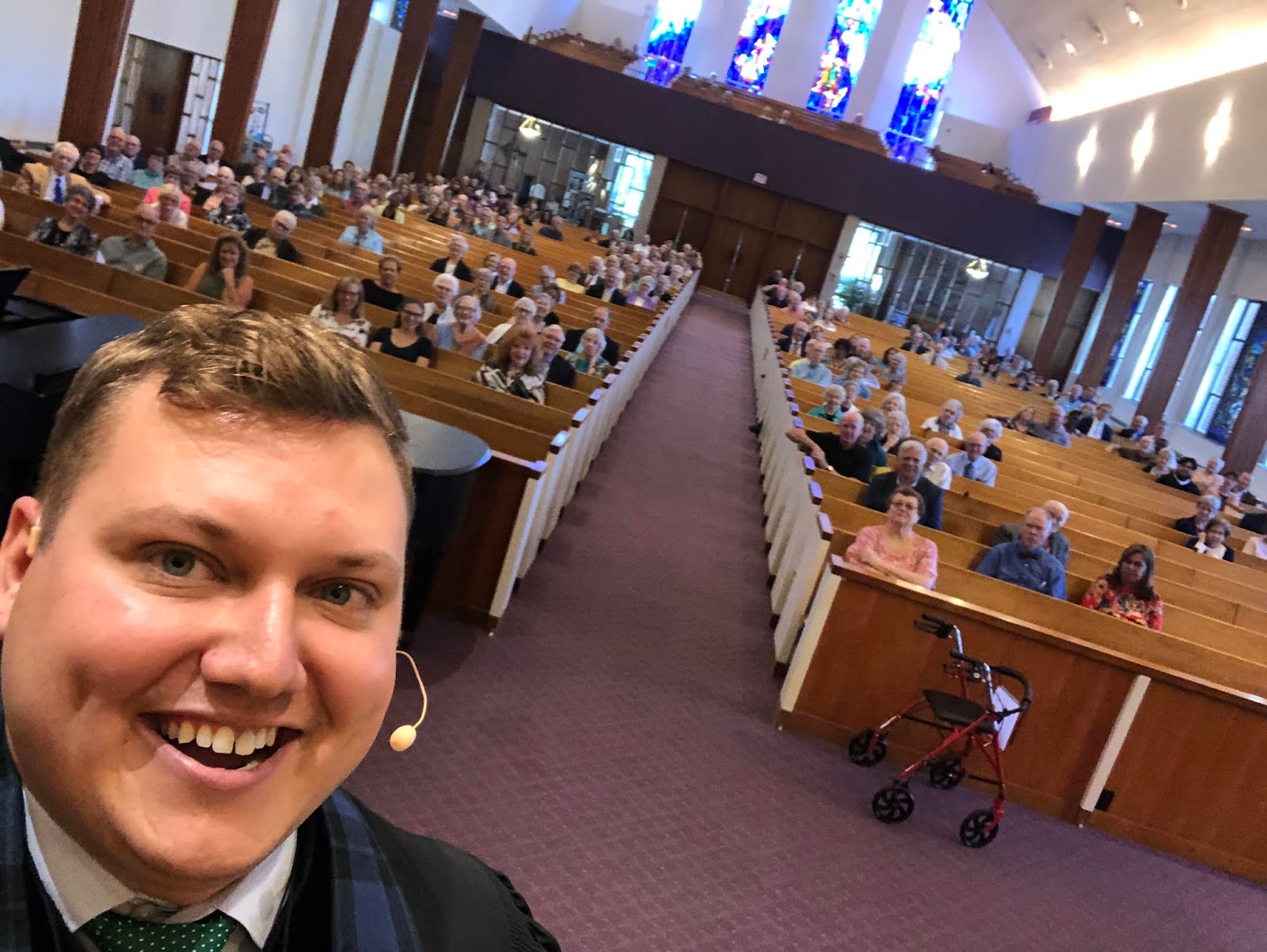
Wait. Just a moment. I need to do something first.

Let me take a selfie. This photo is for us, to capture this moment, to remind of us this memory.


We’ll look back on this picture and we’ll remember how great this day was. Or hopefully how great this day was depending on the vote later. Either way, we’ll have this selfie to document it.

But this is more than just a selfie, right? It’s more than just a picture of all of us. It’s a symbol of a united flock. Metaphorically speaking using our passage from the Gospel of Luke, it is the symbol of God’s flock of sheep. You, me – all of us, gathered together as one before our Shepherd the Christ. This picture; this selfie – shows this! It shows our togetherness, strengthened and supported by one another, smiling and laughing, possibly wondering where this sermon illustration is headed… hey, you’re considering me as an Associate Pastor for Youth and Faith Formation; this shows like the youth, I too know how to take a selfie. But I promise this picture – this selfie – is also taken for another reason

As I said, this picture shows the flock that we are. But does it show who is currently missing? Does it show those who were once was separated from the flock? Does it show those who were once lost from their shepherd? Does it even show those who have since been found and returned?

I can look at this photo, and I see great things; great people! – united together here on this day; but what I don’t see is your individual histories or pasts or stories. I can’t look at a face here and say, this person felt separated from the flock during this period of their life because of this reason. That’s what this photo doesn’t reveal.

Instead, our stories are revealed by the moments we do share together and in the conversations that we have. I pray that one day I do get to hear your stories; that we will get to sit down with one another and have those conversations and that you would share your story with me; the good and the bad; whatever has led you to this place and time. This is how we get to know one another; this is how God’s flock stays together.

So being the preacher that I am believing that sermons are intimate conversations we have with one another and with God… and because as of this point, I am a stranger to nearly all of you; I’m hoping I can use a part of this time to tell you a small part of my story. I want to get to know you and I hope you want to get to know me.

I grew up in the church. This was important for my family. As a family, we would probably be in church once or twice a month, as our schedules allowed. We were a sports family; my brothers and I all competed in different sports so on the Sundays we weren’t traveling for that, we would be in church, Sunday School, etc. So we weren’t the perfect attenders but enough for the pastors and other church goers to know us and for us to know them. And most importantly, we went enough for us to know God. Now my family moved from North Dakota to Colorado when I was entering into seventh grade, and when we moved, we joined the local Presbyterian church in my small rural town, as they at the time had the most active youth program. Sound familiar to any families out there?

Between the summer of my eighth grade year and freshmen year, I along with the youth group at my church went on a two-hour trip to a waterpark. During that trip, while we were all on the bus, two of our youth leaders were having a conversation about a same-sex couple they knew. This couple they were talking about had been trying to have a baby for several years, but unfortunately, each time one of them became pregnant, the pregnancy would end in a miscarriage. I’ll never forget what one of my youth leaders said as to why this was the case. The words are seared into my memory. She said, “Obviously this is God punishing them for the lifestyle they live.”

I always apologize when I tell this story, but it’s an important story for me to tell as it started my journey to becoming pastor. I apologize when I when I tell this story for how offensive this might be for those of you who are part of the LGBTQ community or for those of you who have experienced any kind of loss during pregnancy. As a youth, I wasn’t certain if I believed these words for myself, but my youth leader’s words were the ones I believed the church believed. You see, I came out as gay to my family and friends toward the end of high school. And as someone who was incredibly insecure of my sexual orientation when I first came out, I couldn’t be around people or communities, especially communities of faith, that believed God would punish people for who they loved; you know, punish people like me for being gay. 

For many years, I was deeply hurt by the church. I spent my years as a youth angry at the church and angry at God. I spent the first couple of my college years totally disconnected from the church, still so incredibly angry and wounded.

If we think in terms of this parable that we read today, you could say that for a while, I was a lost sheep who had left the flock. Maybe you can relate to this. Maybe you have a story – a moment in time, whether for a few days or maybe a couple of years – where for whatever reason, you felt lost from the flock. Maybe it was a time of illness or maybe the time of a divorce. Maybe you felt lost because the loss of a job or maybe the death of someone you love. Maybe you felt separated because you heard a person in power or of faith proclaim a message so harmful that it left a wound. Or maybe you felt lost because you see some of the hurt around us every day, in deaths and tragedies, in hate and brokenness. Maybe it’s someone you know and love who is going through a rough patch right now. Maybe even right now, you’re the one feeling a little lost., I get it; I really do!

This parable, which let’s be honest, speaks directly to us, is simple but powerful. Jesus tells those who are around him, the tax collectors and sinners, scribes and Pharisees, this four-sentence story. He asks them if they would leave their 100-sheep flock if one of the one hundred was missing? If they would leave the other 99 sheep in the wilderness to go find that one who was lost? Now Jesus tells them that they would; a true shepherd would go searching for this one sheep. But let’s think about.

This one sheep that could be anywhere out there in the hills of Judaea, possibly even in places where no human could reach. The sheep is alone, not protected from any weather conditions or a multitude of predators. All of this would make the sheep extremely vulnerable. This sheep could even be dead.

But with little hope of finding the sheep or even finding it alive, the shepherd would go to look for this one sheep. And then! When the shepherd does find this sheep, the shepherd spares no expense celebrating the once lost-now found sheep! With friends and family and neighbors all around; together they would rejoice and sing and eat and dance with joy… for the one that was lost, against all odds, was now found.

But why? Why against all odds does the shepherd go looking for the one sheep who was lost and why does the shepherd with more joy in heaven rejoice when that lost sheep is found?

To understand that, we must understand ourselves.. and who we are in the eyes of God.

From the very beginning, before any of us were formed in the womb, God knew each of us. With the hands of a potter and the fingers of a knitter, God carefully and considerably created each of us. And in God’s individual creation of each us, God would call us good, for what God creates is good. Now God, in our creation, knew that sin would be a part of our lives and would be a force that would try to separate ourselves from God, but God, well aware of this, still called each of us by name, defiantly proclaiming that each of God’s creation – each of God’s children – are fearfully and wonderfully made.

So that’s the first part of it; you know. In the eyes of God, in our relationship with God, we are God’s creation, something that God who is all-powerful and all-loving put work into, with intention and love. To have any of us believe that God would separate us from God dismisses the intentional, loving work that God put into each of us. After all, scripture reminds us that nothing in all of creation could ever separate us from who God is and God’s love for us. That’s why Christ goes out searching for us when we are lost; because this separation is not meant to be.

But it’s also more than that; more divine than each of us as God’s children and God’s love for us. Which brings us back to the selfie.

About nine months ago, I witnessed a lecture given by Craig Detweiler, an author, theologian, and the former president of The Seattle School of Theology & Psychology. His lecture, titled “Searching for the Image of God in a Digital Age,” was about finding self-love in the pictures we take of ourselves by seeing the image of God in our faces and bodies. I mean, his lecture was literally on why selfies can be good for the soul because they can remind us that we too are made in the image of God. And this is important because we now live in an age where images are so much more accessible and the pressure to be a certain image is so much greater and therefore can be so much more influential … possibly even damaging if we fail to see the image of God – the imago dei – in these images of ourselves. This is especially relevant for our youth of today.

What leads us to being lost – to being separated from God – is losing faith in the imago dei – the image of God – that is within each of us. To be lost means that we believe that some part of us; some part of our identity is not also made in the image of God. With this in mind, knowing that the person we are is made in the image of God, for us to be lost means that even God is losing a part of Godself. To find those who have been separated is not just the recovery of people who were lost but actually the miraculous gift of recovering God’s image-bearers. It is both the addition to and the completion of the body of Christ.

Returning to my own story, those years that I felt lost – separated from the church and separated from God – was not because my identity as a gay man was something that removed me from the flock. It was the idea in which I believed that this part of my identity wasn’t also made in the image of God. And because God so desperately, so critically, so lovingly wanted me to be found – in the same way he wants all of us to be found, to be returned home to the flock – God did everything – and I mean everything – through family and mentors and friends and strangers and places and even things – God made sure I would be found. God made sure I knew I would be a part of the body of Christ and that we would rejoice together. And friends, I think this moment has now led me to you; to be a part of your flock; to celebrate and rejoice with you. To be with you in your moments of joy and in your moments of sorrow. To work with you to recover the lost… and to remind you in moments where you might feel lost that you too – your identity – the person you are – is an image-bearer of God and to have you back with us and with God, surrounded by divine love and grace, is God’s greatest priority. The image you carry – you as God’s image-bearer – is so incredibly important to God.. and loved by God.

There’s something I tell the youth at my current church every time I have the opportunity; something I feel so deep in my bones and soul; if I haven’t see them in a while, I remind them of this. “We are less without you. We are not complete without you. You are a valued, gifted, much needed part of our community.”  And while I wish I could take credit for this statement; I can’t. I was reminded of this when I started seminary several years ago and when I first responded to the call of being a pastor. And so now I say it you, and I want you to know that I am speaking the Word of God to you, especially if this is the message you need to hear: “We are less without you. We are not complete without you. You are a valued, gifted, much needed part of our community.” 

Friends, thank you for this moment today; to share God’s Word with all of you and a part of my story. I pray and I hope that I can sit down with all of you and hear yours. Until then, I have this picture of us.

I look back at this selfie. This image of all of us. And I see the image of God, in each of your faces; in this community of faith. That’s what this holy moment is; that’s what this picture has captured for us. An image to remind us that Christ will do anything and everything to find those who lost and return them home. Thanks be to God. Amen.